Spades Strategy and Tips
Most spades games are won and lost before the first card is played. A good bid is a bid you can make with a trick to spare. A bad bid is expensive: bid seven and take six, and instead of the 60 points a bid of six would have scored, you lose 70. These tips are written for the game on Spades.net, but they work at any table.
Count Your Tricks Before You Bid
Go through your hand suit by suit. An ace is a trick. A king is a trick if you also hold the ace, or if you have at least one other card in that suit to protect it. A queen only counts if you hold the ace and king with it. Then look at your spades: the ace and king of spades are sure tricks, the queen is a likely one, and every spade beyond the third one is worth about half a trick because it will eventually trump something. Add it up, round down and that is your bid.
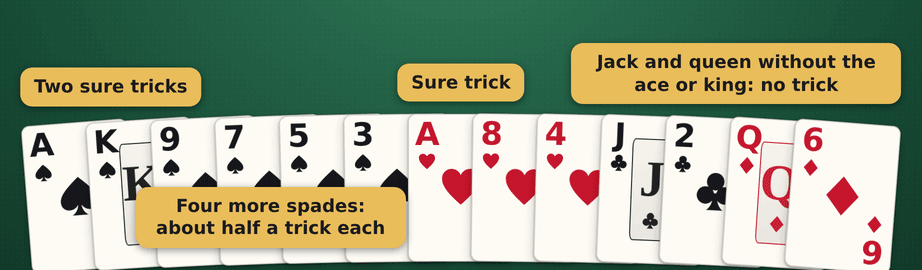
A short side suit is worth more than it looks. If you have only one or two clubs and three or more spades, you will be out of clubs by the second time they are led, and can trump. Count that as an extra trick. A suit with six or seven cards is worth less than it looks: the other players run out of it quickly, and your small cards in it will be trumped.
Listen to the Other Bids
The four bids on the table should add up to somewhere around eleven to thirteen. If the three others have already bid a total of ten, tricks are going to be scarce, and you should bid what you are sure of and not a trick more. If they add up to six, there are tricks going spare and you can be a little braver. Your partner's bid tells you something too: a partner who bids five or six has the spades, so your small spades will not be needed and your kings are safer.
When to Bid Nil
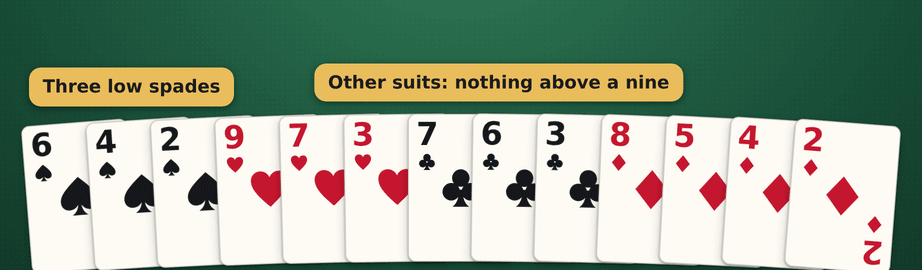
Nil is worth 100 points, which is the same as making a five bid twice. It is also the fastest way to lose 100. A safe nil hand has low cards in every suit, no ace and ideally no king, and at most three small spades. One unprotected king is usually one too many, because sooner or later that suit gets led when you are the last to play. The best moment for nil is when your partner has bid four or more: they hold the high cards and can take tricks off you when you are in trouble.
If you are 100 or more points behind, the game offers blind nil. Take it only when you are losing anyway. A successful blind nil is a 200-point swing that turns a lost game around, and a failed one costs you a game you were already losing.
Covering Your Partner's Nil
When your partner bids nil, your job changes. Lead your high cards first so you win the early tricks and your partner can dump their dangerous cards under them. When your partner is forced to play a high card, beat it if you can, even with a spade. And save a high spade for the end of the hand, because that is when the opponents will try to force the nil bidder to win a trick. The computer players on Spades.net do exactly this, and it is worth watching how they play when you are the one on nil.
Setting the Other Team
When the opponents bid a lot, say eight or nine between them, you don't need to make tricks, you need to take theirs away. Hold on to your high spades instead of trumping cheap tricks early, lead the suits they are short in as late as possible, and remember that a set costs them ten points per trick bid while your own tricks above your bid only cost you a bag. Setting a team that bid nine costs them 90 points, and all it costs you is a few bags.
Avoiding Bags
Ten bags cost 100 points, and they add up faster than you think. Once your team has made its bid, stop winning tricks: play your lowest card, don't trump, and let the other team collect the extras. The score board above the table shows your bag count at all times, and it turns yellow when you are getting close to ten. If you are at eight bags, bid one trick more than you think you have. Making a slightly high bid is better than a certain penalty.
Which Card to Lead
Lead an ace when you have one, before somebody trumps it. Lead the suit your partner bid on, if you can tell. Don't lead a king unless you also hold the ace, and don't lead a suit the opponents are already out of, because that just hands them a cheap trump. When you want to lose a trick, lead a low card from a long suit: somebody will have to beat it.
The best way to learn all of this is to play. Start at the Skilled table on Spades.net, where the computer players count cards but don't look ahead, and move up to Expert and Master when you win more games than you lose.